20 Feb Understanding Pink Hydrogen: Production, Applications, and Environmental Impact
What Is Pink Hydrogen?
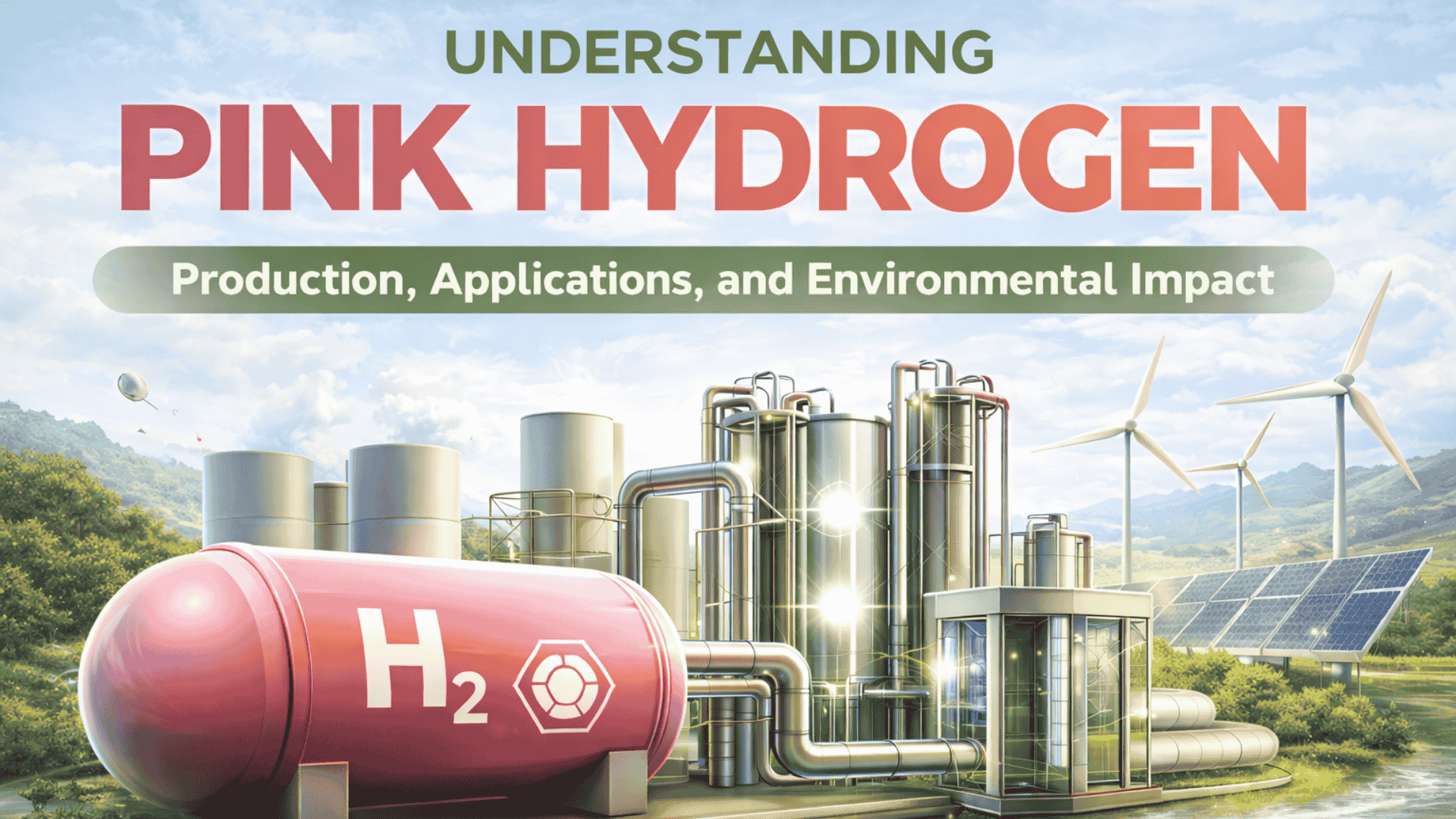
Pink hydrogen refers to hydrogen produced via water electrolysis using electricity generated from nuclear power. Electrolysis splits water (H₂O) into hydrogen (H₂) and oxygen (O₂). The defining characteristic of pink hydrogen is not the production method itself, electrolysis is common to several hydrogen types, but rather the energy source powering the process.
Because nuclear power produces electricity with near-zero operational carbon emissions, pink hydrogen is considered a low-carbon or clean hydrogen pathway, comparable in climate impact to green hydrogen when lifecycle emissions are considered.
Introduction: The Expanding Green Energy Landscape
The global energy system is undergoing a profound transition driven by climate change mitigation goals, energy security concerns, and rapid technological innovation. Renewable energy sources such as wind, solar, and hydropower have experienced unprecedented growth over the past two decades. Alongside this expansion, hydrogen has emerged as a critical energy carrier capable of decarbonizing sectors that are difficult to electrify, including heavy industry, long-distance transport, and chemical manufacturing.
While much attention has been given to green hydrogen (produced using renewable electricity), another variant, pink hydrogen, is gaining prominence as countries reassess the role of nuclear energy in achieving net-zero emissions. Understanding pink hydrogen is therefore essential to evaluating future clean energy strategies.
Why Do We Need Pink Hydrogen?
Rising Global Energy Demand
As economies grow and electrification expands, global energy demand continues to increase. Renewable energy alone, while crucial, faces intermittent challenges and land-use constraints. Pink hydrogen offers a complementary solution by leveraging existing and future nuclear infrastructure to produce clean hydrogen at scale.
Grid Stability and Baseload Power
Unlike wind and solar, nuclear energy provides continuous baseload electricity. This makes it particularly well-suited for hydrogen production, which benefits from steady power input to operate electrolyzers efficiently and economically.
Decarbonizing Hard-to-Abate Sectors
Industries such as steel, cement, aviation, and ammonia production require high-temperature heat or chemical feedstocks that electricity alone cannot easily supply.
Environmental Benefits of Pink Hydrogen
- Reduced Greenhouse Gas Emissions
When nuclear power is used for electrolysis, hydrogen production emits little to no CO₂, especially compared to conventional “grey hydrogen,” which relies on fossil fuels and accounts for significant global emissions.
- Improved Air Quality
Pink hydrogen production avoids combustion-related pollutants such as nitrogen oxides (NOₓ) and sulfur dioxide (SO₂), contributing to improved air quality and public health outcomes.
- Efficient Use of Nuclear Energy
Producing hydrogen during periods of low electricity demand can help optimize nuclear plant output, reducing energy curtailment and improving overall system efficiency.
Pink Hydrogen in the Context of Green Energy Trends
The growing interest in pink hydrogen aligns with several global trends:
- Net-zero commitments by governments and industries
- Reevaluation of nuclear power as a climate solution
- Rapid growth in hydrogen demand, projected to multiply several-fold by mid-century
- Energy security concerns, particularly in regions seeking to reduce dependence on imported fossil fuels
Rather than competing with renewable energy, pink hydrogen is increasingly viewed as complementary, forming part of a diversified clean energy portfolio.
Use Case: Pink Hydrogen in Transport Industry
Pink hydrogen can play a measurable role in decarbonizing the transport sector by supplying low-carbon hydrogen fuel for heavy-duty vehicles such as long-haul trucks and buses. In 2024, global hydrogen demand in road transport grew nearly 40 % to ~100 kt, with heavy-duty trucks accounting for about two-thirds of that use due to their high energy needs and extensive travel distances, making them a key target for hydrogen fuel cell deployment. Fuel cell electric vehicles powered by hydrogen emit only water vapor at the tailpipe, which, when sourced from low-carbon hydrogen like pink hydrogen, significantly reduces lifecycle greenhouse gas emissions compared to diesel. Because heavy freight is difficult to electrify with batteries without incurring large weight penalties and slow charging, hydrogen produced with reliable baseload power offers a viable pathway to reduce emissions in one of the hardest-to-abate transport subsectors.
Challenges and Considerations
Despite its advantages, pink hydrogen faces several challenges:
- High capital costs associated with nuclear plants and electrolyzers
- Public concerns surrounding nuclear safety and waste disposal
- Regulatory uncertainty in defining what qualifies as “clean hydrogen”
Addressing these issues will be critical for large-scale deployment.
Pink hydrogen, produced via water electrolysis powered by nuclear energy, remains an early-stage low-carbon hydrogen pathway with limited commercial deployment. Sweden’s OKG AB, jointly owned by Uniper and Fortum, operates the Oskarshamn Nuclear Power Plant, where it produces hydrogen for internal plant operations. Following the modernization of its hydrogen facility, OKG began producing hydrogen for commercial supply. In January 2022, OKG signed a contract with Linde Gas AB to deliver nuclear-powered hydrogen, marking one of the first commercial agreements for pink hydrogen globally. Production relies on electrolysis powered by electricity from Oskarshamn unit three, producing hydrogen with minimal carbon emissions. While the volumes remain modest compared with green hydrogen projects, the initiative demonstrates the technical feasibility and early market viability of nuclear-powered hydrogen. The OKG project highlights the strategic use of existing nuclear and electrolyser infrastructure to enter emerging hydrogen markets and provides a reference model for scaling low-carbon hydrogen production in countries with nuclear capacity.
The environmental impact of pink hydrogen is positive because it avoids fossil fuel emissions and supports the decarbonization of industry and transport. Economically, it creates new revenue streams for nuclear operators and supply chain opportunities for industrial gas and mobility sectors, while demonstrating a pathway for sustainable hydrogen commercialization.
Conclusion
Pink hydrogen represents a significant, though sometimes overlooked, pathway in the transition to a low-carbon energy system. By combining the reliability of nuclear power with the versatility of hydrogen, it offers a promising solution to rising energy demand and deep decarbonization challenges. As green energy deployment accelerates worldwide, pink hydrogen may play a vital supporting role in building a resilient, sustainable, and climate-aligned energy future.
Frequently Asked Questions
Pink hydrogen is hydrogen produced through water electrolysis powered by nuclear energy. It is considered a low-carbon form of hydrogen because nuclear power generates electricity without direct greenhouse gas emissions, making it a stable and scalable option for clean energy production.
Pink hydrogen is produced by using electricity from nuclear power plants to split water into hydrogen and oxygen through electrolysis. This process benefits from a continuous energy supply, enabling consistent hydrogen production compared to renewable-based methods.
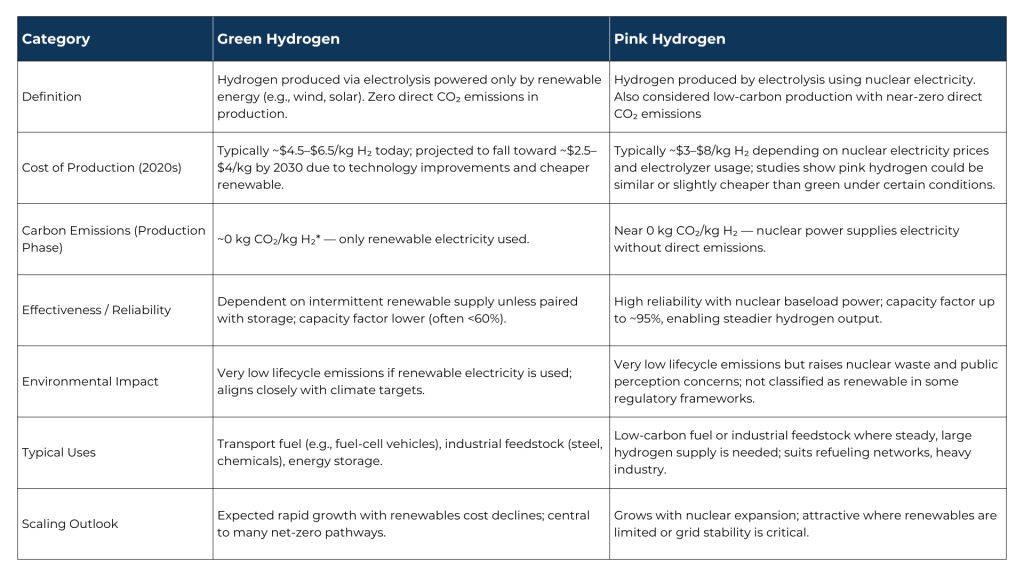
Pink hydrogen uses nuclear energy for electrolysis, while green hydrogen uses renewable energy sources such as wind or solar. Pink hydrogen offers more stable, continuous production, whereas green hydrogen depends on variable renewable energy availability.
Pink hydrogen is considered low-carbon because it avoids direct emissions during production. However, its environmental impact depends on factors such as nuclear waste management, infrastructure, and lifecycle emissions associated with nuclear energy.
Pink hydrogen is used in industrial processes, clean transportation, and energy storage. It is particularly valuable in sectors that are difficult to electrify, such as steel production, chemicals, and long-distance transport.
Pink hydrogen provides a reliable and scalable source of low-carbon hydrogen, supporting the transition to clean energy systems. Its ability to deliver continuous production makes it a strong complement to renewable energy in achieving global decarbonization goals.
Pink hydrogen is scalable in regions with established nuclear infrastructure. Its production can be expanded using existing nuclear power plants, making it a viable option for large-scale hydrogen generation compared to renewable-dependent alternatives.
Blog by Shreya Ghimire,
Research Analyst, Frost & Sullivan Institute